
Meet Isadora
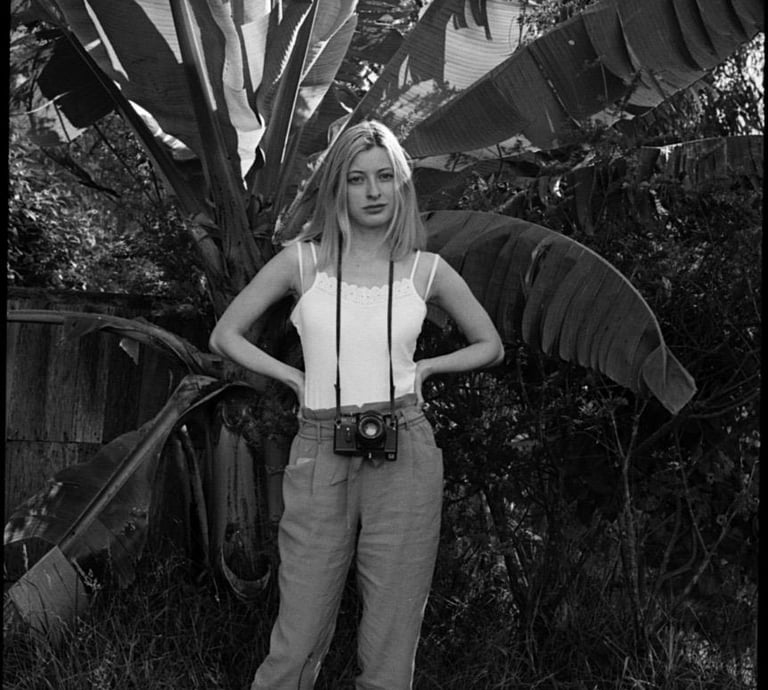
Isadora Dux (b. 1993) is an Ecuadorian painter whose work explores the invisible dimensions of human presence through figurative painting and symbolic representation. Born to an Ecuadorian father and a Ukrainian mother from the Donetsk region, she grew up between Latin American and European cultural traditions and is currently based in Quito.
After studying in Germany and Spain, Herrera Dux developed an early artistic practice under the mentorship of the Belarusian painter Leonid Khobotov, whose rigorous approach to symbolism, structure, and formal discipline introduced her to the legacy of Neo-Constructivism. Her first solo exhibition was held in 2017 at the Casa de la Cultura Ecuatoriana in Quito. Since then, her work has been presented in exhibitions in Ecuador and Belarus.
She later completed a Master's degree in Visual Arts, specializing in painting, at the Accademia di Belle Arti di Brera in Milan. Alongside her studio practice, she pursued philosophical research into the relationship between technology, individuation, and interiority, culminating in a thesis that defended the human right to boredom and contemplative experience as fundamental conditions of freedom.
Upon returning to Ecuador, Herrera Dux deepened her engagement with observational drawing and painting from life while developing a practice that brings together the structural language of Eastern European modernism and the perceptual discipline of the academic tradition.
Her paintings investigate the psychological, emotional, and existential dimensions of human experience that remain beyond ordinary perception. Through subtle relationships of tone, colour, form, texture, and light, she seeks to reveal an interior presence that extends beyond physical likeness. Symbolic elements frequently emerge within her compositions, not as allegories, but as visual manifestations of the sitter's inner world and of her own reflections on the human condition.
Underlying her practice is the conviction that beauty is not decorative but transformative. She approaches painting as a means of cultivating attention, restoring interiority, and affirming the dignity of the human person in an increasingly technological world.
Contact
Reach out for inquiries or collaborations.
info@isadora.art
© 2026. All rights reserved.